Core Facilities
Genome Sciences
In This Section
Core Facilities
- General Information
- Animal-Based Studies
- Biochemical and Biophysical Studies
- Biorepository
- Cell-Based Studies
- Multiomic Analysis
- Informatics and Data Analysis
- Multiscale Imaging
- Pathology and Specimen Processing Resources
- Pharmacology
- Research Software and Applications
- Services
The Penn State College of Medicine Genome Sciences Core (RRID: SCR_021123) is a full-service facility dedicated to advancing genomic, epigenomic, and transcriptomic research. We provide expert consultation, state-of-the-art instrumentation, and comprehensive services to investigators at Penn State and beyond.
Our capabilities include:
Single-cell RNA-seq, ATAC-seq, and multi-omic analyses
Spatial transcriptomics for frozen and FFPE tissue
Whole genome, exome, epigenome, and transcriptome sequencing
Genotyping and DNA methylation profiling using array technology
Full bioinformatics support for robust data analysis
For general inquiries, email GenomeSciences@pennstatehealth.psu.edu.
Instrument and Services
Nextseq 2000 is a medium throughput sequencer that allows to generate ~100 million reads to 1.8 billion reads in one run
Novaseq 6000 is a high throughput sequencer that allows to generate ~750 million reads to 10 billion reads in one run
Miseq is a low throughput sequencer that allows to generate ~1 million reads to 20 million reads in one run
This is for automated capture of single cells from unfixed or fixed cells to perform RNA-seq, ATAC-seq, or both assays. Each well allows capture of 20,000 cells in one well.
iScan is a high throughput scanner for Illumina's mnicroarrays for a wide range of applications including genotyping and DNA methylation quantification
The 4200 TapeStation system is a high-throughput automated electrophoresis platform for nucleic acid sample quality control. It allows analysis of individual samples, up to 96 samples per run to get integrity numbers.
QuantStudio 5 system is a qPCR instrument for detecting differences in gene expression, or genotype alleles. Genome Sciences core has two Quanstudio 5 and are available as self-use instruments. Please schedule the instrument in iLab.
Procedures, Protocols and Forms
These sample images were provided by Darran May, Aubree Hoover and Tom Sims as part of a presentation on the interpretation of Bioanalyzer 2100 RNA analysis. Similar interpretation also applies to Tapestation profiles too (updated images coming soon!)
Image of Perfect (Intact Eukaryotic) Total RNA
A: 5S subunit; prep-dependent.
B: There maybe a small peak present at approximately 24 seconds that represents 5s, 5.8s and tRNA. This is especially noted with phenol or Trizol extraction, and is eliminated when total RNA is prepped using Qaigen columns, which remove the small RNAs. (Substitute 16S and 23S for prokaryotic samples.)
C: Distinct 18s ribosomal subunit.
D: No small, well-defined peaks between ribosomal peaks.
E: Distinct 28S ribosomal subunit (usually approximately twice 18S).
F: Flat baseline throughout electropherogram.
Samples that result in the above electropherogram image are good to use for message RNA preparation.
Image of Partially Digested Total RNA
A: Intensities of the smaller degraded RNA increases.
B: Baseline between and to the left of the ribosomal peaks becomes jagged.
C: 18s ribosomal subunit.
D: Intensities of the peaks decrease.
E: 28S ribosomal subunit; in general, the 28S peak begins to degrade first.
F: Peak begins to shift toward the left of the electropherogram.
Samples that result in the above electropherogram image are borderline for message RNA preparation and should be under serious consideration of re-extraction.
Image of Severely Degraded Total RNA
A: Overall decrease in fluorescent signal.
B: Ribosomal peaks mostly degraded; generally 28S peak degrades first.
C: Baseline shifts from flat linke to distinct fragmented peaks.
D: Major shift of products toward left of electropherogram as smaller fragments are created by degradation.
Samples that result in the above electropherogram image should not be used to prep message RNA.
Image of Genomic-DNA-Contaminated Total RNA
A: Nano peak.
B: Genomic DNA skewing 8S peak.
C: Additional genomic DNA peak.
The sample may wrongly be considered degraded, and concentration may be inflated. Genomic DNA may interfere with downstream reactions if not removed. Treatment can be done during isolation with QIagen RNase-Free DNase or by post-isolation digestion.
(This sample was provided by Joan Tupper.)
Check back for details.
Check back for details.
Work With the Core
The facility receives either tissue/cells, DNA/RNA or customer-generated NGS libraries. Samples are processed based on agreement reached during consultations on the design of the experiment. Well-experienced staff members are available for assisting in project operations. The facility develops new applications to accommodate state-of-the-art NGS technologies.
Additional details will be posted at a later date.
Please check iLab or contact the core at genomesciences@pennstatehealth.psu.edu
Citation
All publications, press releases or other documents that result from the utilization of Genome Sciences core including instruments, services or support are required to credit the core facility as follows:
“The Genome Sciences Core (RRID:SCR_021123) services and instruments used in this project were funded, in part, by the Pennsylvania State University College of Medicine via the Office of the Vice Dean of Research and Graduate Students and the Pennsylvania Department of Health using Tobacco Settlement Funds (CURE). The content is solely the responsibility of the authors and does not necessarily represent the official views of the University or College of Medicine. The Pennsylvania Department of Health specifically disclaims responsibility for any analyses, interpretations or conclusions.”
Contact the Core
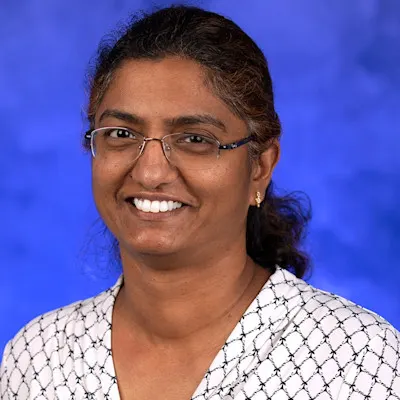
Sirisha Pochareddy
Administrative Director of MultiOmics Section, Genome Sciences Core Facility

Anne Benko
Research Technologist, Genome Sciences Core Facility

Matthew Jevit
Research Technologist, Genome Sciences Core Facility
Brian Ennis
Research Data Scientist, Genome Sciences Core Facility