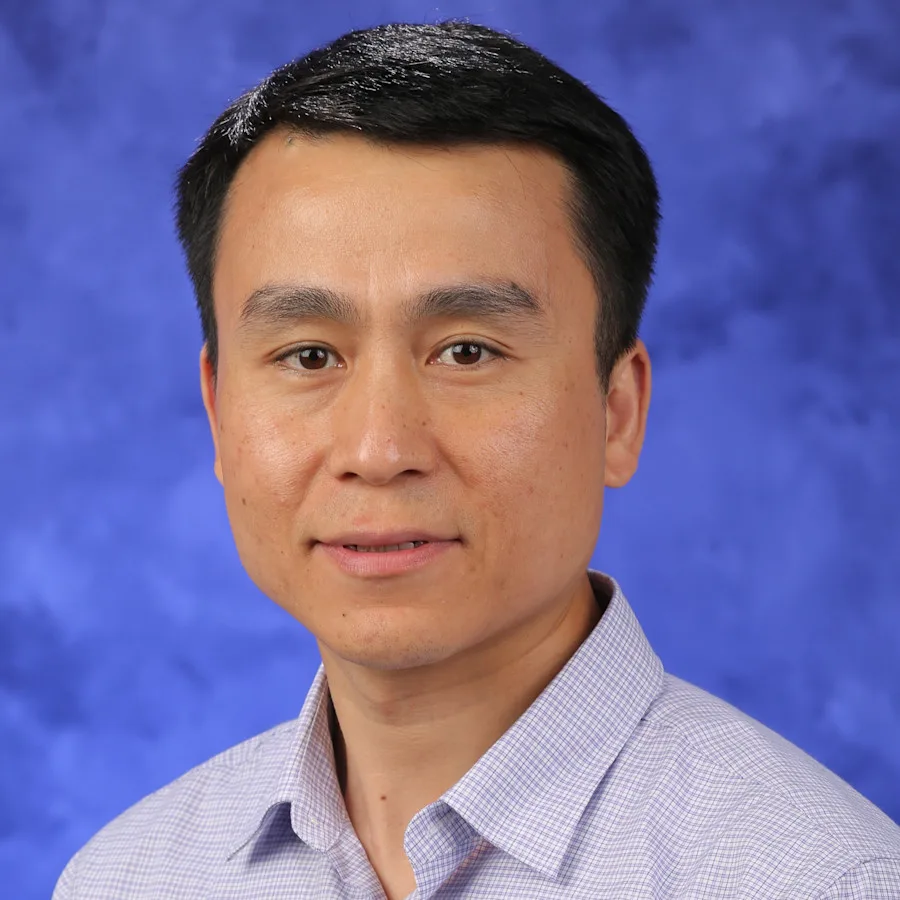
Wei Li, PhD
Associate Professor, Pediatrics
Associate Professor, Cell and Biological Systems
Director, Translational Therapeutics Emphasis Area, Biomedical Sciences Graduate Program
Mechanisms of Carcinogenesis, Penn State Cancer Institute
Biography
Dr. Wei Li’s laboratory studies cancer biology, with a focus on how metabolic stress, oxidative stress, regulated cell death, and the tumor microenvironment interact to influence cancer progression and therapeutic response. The laboratory investigates these fundamental mechanisms in both adult and pediatric cancers, using brain tumors as major experimental models.
A major research area examines the relationship among tumor necrosis, ferroptosis, and tumor immunity. The lab discovered that tumor-associated neutrophils can promote glioblastoma necrosis by transferring myeloperoxidase (MPO) into cancer cells and inducing ferroptotic cell death. Subsequent studies identified LC3-associated phagocytosis (LAP) and the Vps34-UVRAG-RUBCN complex as key regulators of this tumor cell-neutrophil interaction.
The laboratory also investigates how cancer cells respond to metabolic stress, hypoxia, ischemia, and nutrient deprivation. This work has identified stress-response pathways involving p38 MAPK, MK2, IRE1α, and ATF4 that connect metabolic stress to cancer cell death and inflammatory signaling.
A third research focus is oxidative stress and redox biology. The lab identified thioredoxin reductase 1 (TrxR1/TXNRD1) as a metabolic vulnerability in glioblastoma and demonstrated that targeting TrxR1 can induce disulfidptosis, an emerging form of regulated cell death associated with disruption of disulfide homeostasis.
Graduate students interested in cancer biology, cancer metabolism, tumor immunology, cell death, ferroptosis, redox biology, tumor microenvironment, glioma, or experimental therapeutics are encouraged to explore research opportunities in the laboratory.
Dr. Wei Li is a faculty member in the Biomedical Sciences (BMS) Graduate Program, Neuroscience Graduate Program, and MD/PhD Medical Scientist Training Program.