LION Mobile Clinic
Research
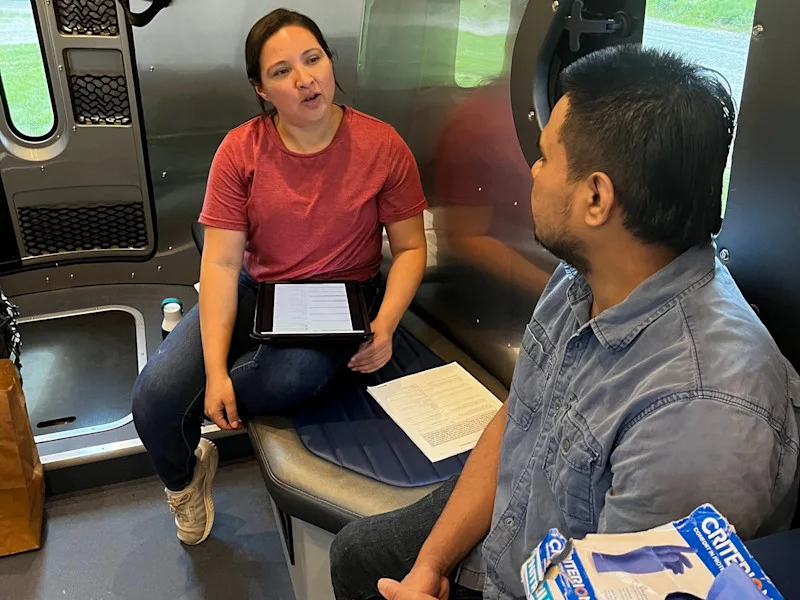
Research Shaped With Communities
LION Mobile Clinic conducts community-engaged research with rural communities across Pennsylvania. By listening to community priorities, identifying barriers to health and resources, and learning from clinic and partner experiences, we identify practical ways to strengthen services and support rural health.
Our research is designed to inform action. Findings help LION Mobile, community partners, students, and health professionals understand what is working, where additional support is needed, and how programs can better connect people with care, knowledge, and resources.
How We Work With Communities
Listen to community priorities
We begin by learning from residents, community organizations, and local partners about the strengths, needs, and opportunities they identify.
Build research with partners
When appropriate, community partners help shape research questions, outreach approaches, and interpretation of findings.
Protect privacy and respect participation
Research activities follow applicable Penn State requirements for ethical review, privacy, and informed participation.
Share learning back
We share approved findings through community conversations, publications, presentations, and program improvements.
Research Projects
The ACCESS for Cervical Cancer Screening study is evaluating an educational intervention to help eligible individuals complete HPV self-collection for cervical cancer screening through the LION Mobile Clinic.
What we are learning: Can education and convenient access through the LION Mobile Clinic help eligible people in rural communities feel prepared and confident to complete HPV self-collection for cervical cancer screening?
Project team: Penn State Cancer Institute Community Outreach and Engagement
Status: Active
Study overview: This pilot study evaluates an educational intervention to promote cervical cancer screening through HPV self-collection at LION Mobile Clinic events. Study activities include reviewing educational materials, completing a brief questionnaire about knowledge, readiness, and confidence, and completing an FDA-approved HPV self-collection test if eligible. The study will assess how many eligible individuals complete HPV self-collection and whether participants find the educational intervention acceptable and helpful.
Who may be eligible: The research team is seeking people ages 30-65 who have a cervix and are due for cervical cancer screening. Participants must be at average risk for cervical cancer, have no concerning vaginal bleeding or other exclusionary symptoms, and be able to read and understand English and/or Spanish. Participants must also have an email address. The research team will confirm eligibility, including screening history and other health information.
Benefits and participant information: Participants may learn more about cervical cancer screening and HPV self-collection and may feel more prepared and confident to complete screening. Eligible participants may complete an FDA-approved HPV self-collection test at no cost through the study. If the test result requires follow-up, participants will receive information about next steps and care resources. The cost of follow-up visits, diagnostic testing, treatment, or other related medical costs are not covered through the study, and this follow-up care cannot be provided at the LION Mobile Clinic.
Interested individuals can learn more and complete eligibility screening in person at LION Mobile Clinic events.
Learn more: For more information, contact the ACCESS team at communitypsci@psu.edu.
Study reference: IRB #28796
The Prune-Up Study is examining whether eating prunes every day during the menopause transition may help slow the rapid bone loss that can occur during this time. Researchers are also studying how prune intake relates to inflammation, gut health, bone strength, and bone structure.
What we are learning: Can a daily prune intervention during perimenopause help slow bone mineral density loss, and how does prune intake relate to inflammation, gut permeability and microbiome, bone strength, and bone geometry?
Project team: Penn State Women’s Health and Exercise Lab
Status: Recruiting
Learn more: For more information, contact the Prune-Up Study team at prunes@psu.edu or 814-863-4488.
Collaborate With LION Mobile Research
LION Mobile welcomes conversations with community organizations, faculty, investigators, students, and health professionals whose work aligns with community priorities in rural central Pennsylvania. Together, we can explore questions, partnerships, and approaches that support practical learning and community-informed action.
Publications and Presentations
LION Mobile shares approved research and program learning through scholarly publications, conference presentations, community reports, and other public resources.